

Impact
Farmers adopt it because it pays. The methane reduction comes free.
Farmer case study
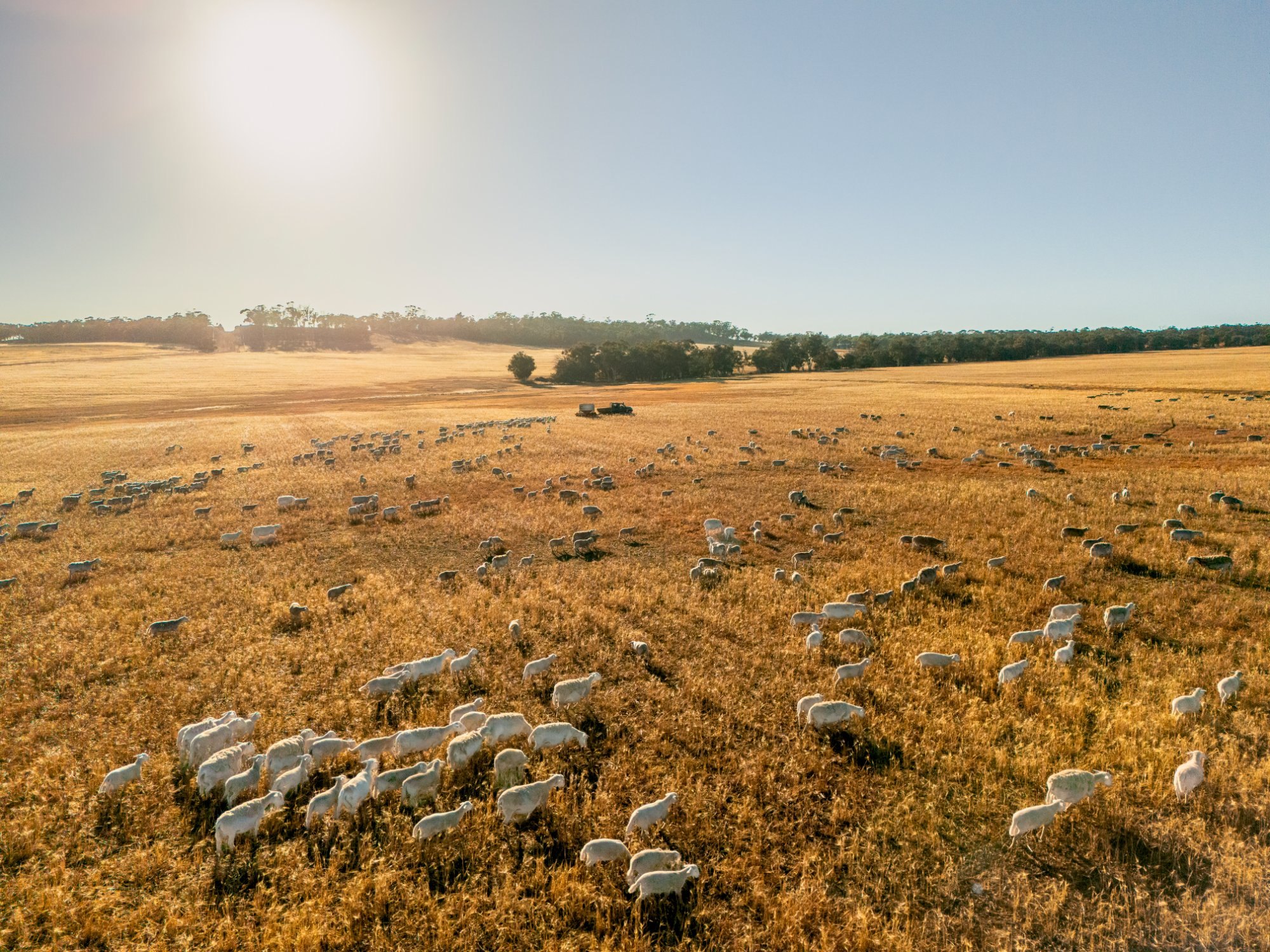
Josh Barton, Western Australia
“We used to mix our own feed — lupins and barley with a bicarb buffer for acidosis risk. Switching to HyFibe pellets was virtually overnight. With less labour, more consistency in the feed and in the stock we send out, whilst at the same time freeing up our stubble and pasture paddocks through the dry months. It’s safer, easier, and the animals were eating it on day one.”
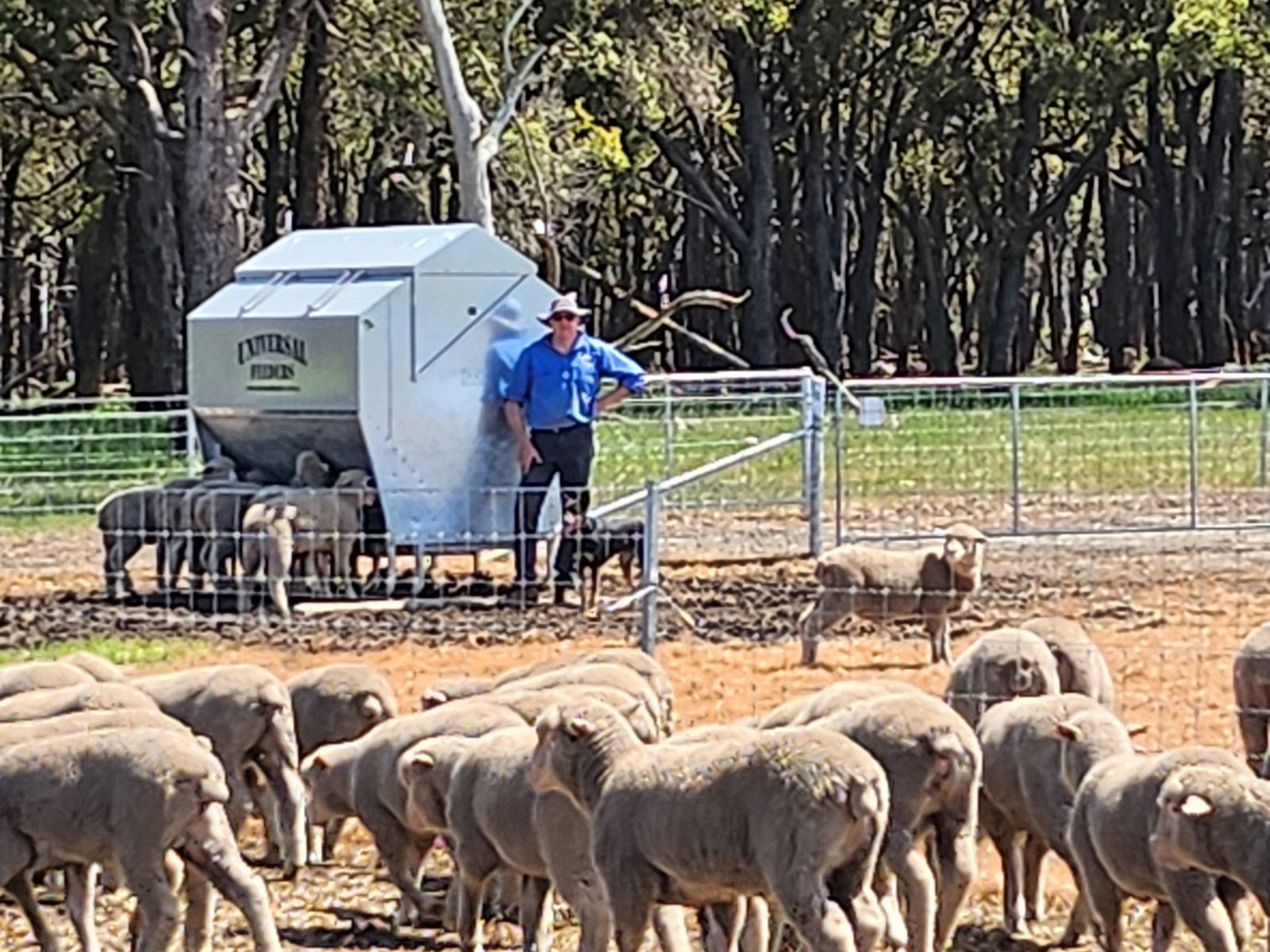
Hillcroft Farms, in Popanyinning WA, runs 8000 ewes and finishes around 7000 lambs a year. Before HyFibe pellets were being used, rations were home-mixed — grain blended with acid buffers, with attempts at making their own pellets on-farm. HyFibe pellets offered a simple, consistent alternative, delivering measurable productivity gains and easier day-to-day management.

Commercial-scale lamb feedlot trials
indicative results
>480 g
average liveweight gain per day
<4 FCR
FCR: Feed Conversion Ratio
kg dry matter of feed per kg liveweight gain
38%
lower methane yield
59%
lower methane intensity
Indicative trial results of commercial-scale feeding of Merino-cross lambs at the Milne Feeds trial feedlot (Low-Methane Feed: spring 2025; 407 head; entry 40.8 kg to end 50 kg | Reference grain-mix feed: spring 2023; 436 head; entry 39.8 kg to end 50 kg | methane measurement by OP-FTIR).
Productivity
Even small increases in agricultural productivity, implemented worldwide, have massive impact.
HyFibe boosts fibre productivity
Fibre is the cheapest, most abundant input in ruminant production — and it is under-utilised everywhere.
- 01 Waste fibre becomes energy Straw, husks, hulls and bran.
- 02 Animals grow faster More of each kilogram eaten becomes liveweight.
- 03 Farm profit grows Same feed bill, more out the gate.
- 04 Supply chain gains Cheaper protein, lower footprint, no premium charged to anyone.
Where HyFibe works
Where the ruminants and the cereals are
Thirty-one countries hold 69% of the world’s cattle and sheep, 82% of its cereals and 52% of its imported grain.
Source: FAOSTAT 2024. Tiers 1 and 2: top 35 for cereals and for cattle or sheep. Tier 3: top 35 for cattle or sheep and for cereal imports, outside top 35 for production. Holding size from national agricultural censuses, 1996–2022.
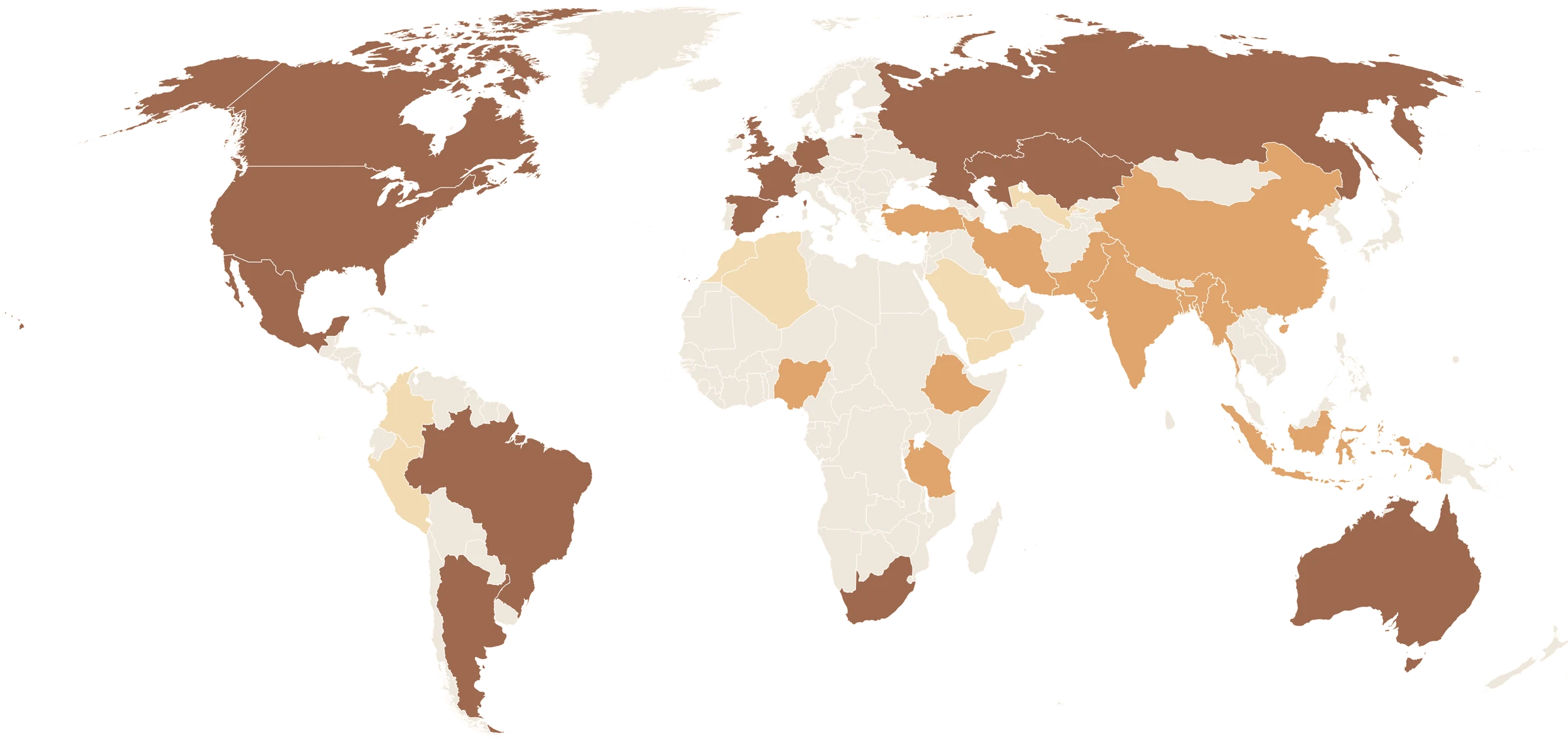
Predominantly large landholdings, high numbers of livestock and cereal crops — 13 countries
Maize · wheat · barley · sorghum · oats
Predominantly smaller landholders, high numbers of livestock and cereal crops — 11 countries
Rice · maize · wheat · sorghum · millet
High numbers of livestock and large quantities of processing residues from imported grain — 7 countries
Hulls · husks · bran · screenings
Wherever crops are harvested or grain is milled, the fibre is already beside the animals that can use it.
Climate impact
Lower methane is a by-product of better fermentation — not a trade-off.
Most methane fixes ask someone to pay for the climate benefit. HyFibe improves how the rumen uses fibre, so the same change that grows animals faster also cuts the energy lost as methane.
For retailers, that means a Scope 3 reduction their farmers want to adopt.
We’re always on the lookout for strategic partners.
Business. R&D. Investment.
Contact us for a confidential discussion.